Few things catch a household out like the heating going off on a cold morning, and more often than not the cause is boiler pressure. It is one of the most common reasons a boiler locks out, and the good news is that topping it back up is usually a five-minute job you can do yourself. This guide explains what the pressure should read, why it drops, how to repressurise the boiler step by step, what to do if it is too high, and when the problem is one for an engineer.
What Should My Boiler Pressure Be?
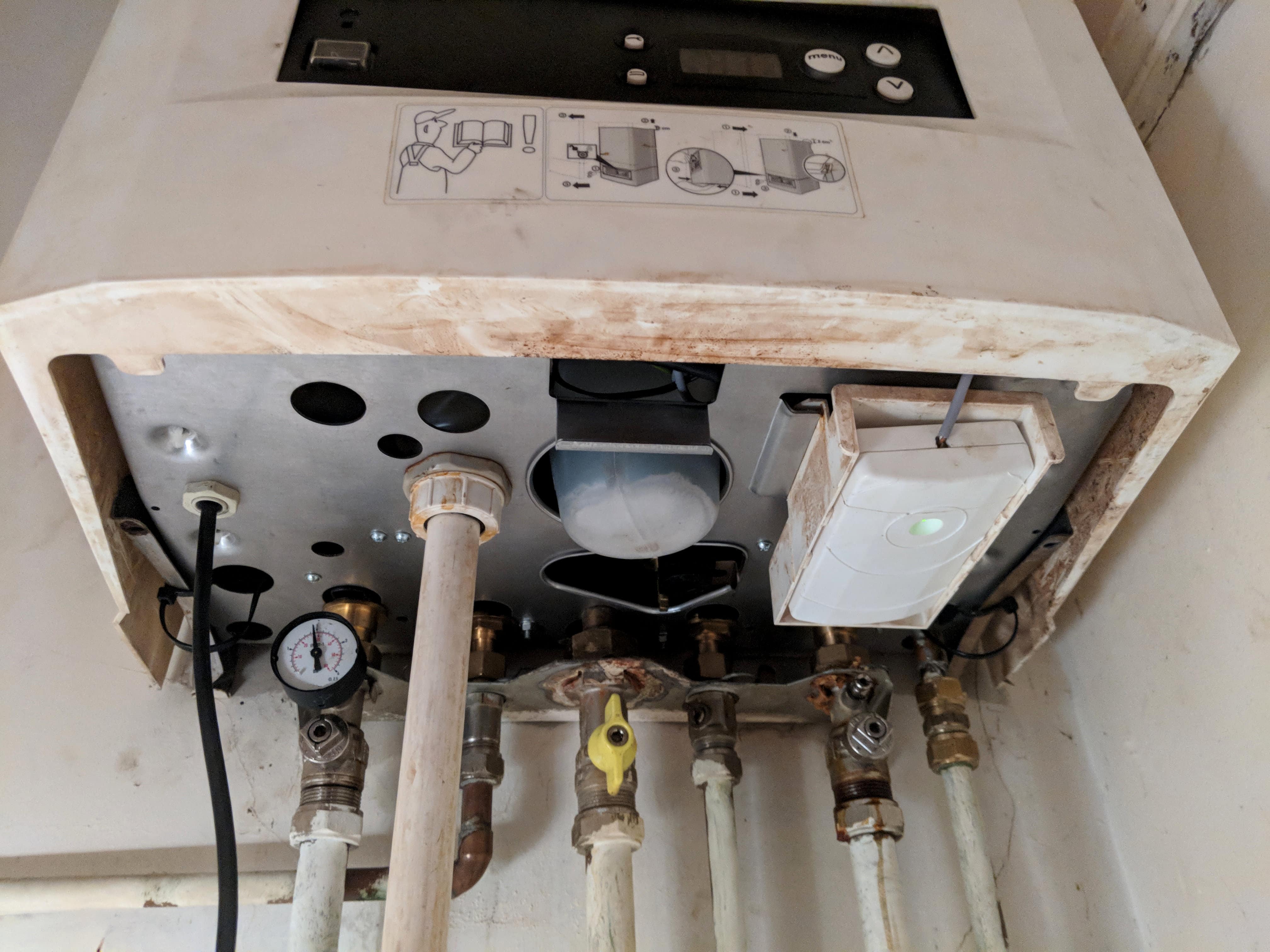
Most boiler manufacturers set the ideal cold pressure at between 1 and 1.5 bar. You read it on the gauge on the front of the boiler, which is either a round dial or a digital display, and on many dials the healthy range is marked in green. When the heating is off and the system is cold, the needle should sit in that band. As the heating comes on and the water heats and expands, it is normal for the pressure to rise, usually by up to about a bar above the cold reading, before settling back down as the system cools. A reading that stays below 1 bar is too low and will usually stop the boiler firing, while a reading pushing past about 2.75 bar is too high and puts the system under strain. If the pressure rises much more than a bar once the heating is up to temperature, the expansion vessel may need attention, which is a job for an engineer.
| Gauge reading | What it means | What to do |
|---|---|---|
| Below 1 bar, cold | Too low, the boiler may lock out | Repressurise using the filling loop |
| 1 to 1.5 bar, cold | Healthy, the normal resting range | Nothing, this is where it should sit |
| A rise of up to about 1 bar when hot | Normal while the heating is running | Nothing, it settles as the system cools |
| Above 2.75 bar | Too high, the system is under strain | Bleed a little water from a radiator |
Why Does My Boiler Keep Losing Pressure?
A slow, steady drop in pressure almost always means water is escaping from the system somewhere. The most common causes are a small leak on a pipe joint, a radiator valve or the boiler itself, a problem with the expansion vessel that normally absorbs the rise and fall in pressure, or a pressure relief valve that is weeping water out through the overflow pipe outside. Bleeding your radiators will also lower the pressure, so if you have recently bled them, a one-off top-up is all you need. If you find yourself repressurising every few days, though, that is not normal, and it points to a fault worth getting looked at before it gets worse. A pressure that keeps dropping usually means a leak somewhere, which we cover in our guide on why a boiler leaks water. A boiler that is serviced each year tends to flag these small faults early, which is one of the reasons an annual boiler service is worth having.
How to Repressurise a Boiler, Step by Step
Repressurising a boiler is a job most people can do themselves in a few minutes. Work through it slowly and keep an eye on the gauge.
- Turn the boiler off and let it cool. Switch the heating off and give it time to go cold, so you get an accurate reading before you start.
- Find the filling loop. This is usually a silver braided hose or a built-in key underneath the boiler, with one or two valves or taps on it.
- Open the valves slowly. Open both valves so you hear water flowing into the system, and watch the pressure gauge begin to rise.
- Stop at 1 to 1.5 bar. As soon as the needle reaches the middle of the healthy band, close both valves firmly. It is easy to overshoot, so go gently.
- Turn the boiler back on. Fire it up, and if it is showing a fault or lockout code, reset it once. The heating should now work as normal.
- Check that it holds. Keep an eye on the gauge over the next few days. If the reading stays put, you are done. If it drops again, there is a leak to find.
What If My Boiler Pressure Is Too High?
If the gauge reads above about 2.75 bar when the system is cold, the pressure is too high, and the usual cause is that the filling loop has been left slightly open or the system has been overfilled. The simplest fix is to let a little water out of a radiator. Lay down a cloth to catch drips, turn the radiator bleed valve a quarter turn with a bleed key until water trickles out, then close it again as soon as the gauge drops back into the healthy band. If the pressure climbs on its own when nobody has topped it up, the expansion vessel or the pressure relief valve may be at fault, and that is a job for an engineer rather than a DIY fix.
When to Call a Gas Safe Engineer
Topping the pressure up once in a while is perfectly normal and nothing to worry about. It is worth calling an engineer when the pressure keeps dropping however often you refill it, when you can see water pooling under the boiler or dripping from an overflow pipe outside, when repressurising does not clear the fault code, or when the gauge simply will not hold a steady reading. Each of these points to a leak or a failing part that needs finding and fixing properly rather than papering over. GPM London's Gas Safe registered engineers carry out boiler repairs across South East London and Kent, usually the same day, and will trace the real cause rather than just topping it up.